Marketing

AI SEO for startups
AI, Digital Marketing, Marketing, SEO

AI SEO for Startups: 7 Amazing Tips to Improve Your SEO Strategy

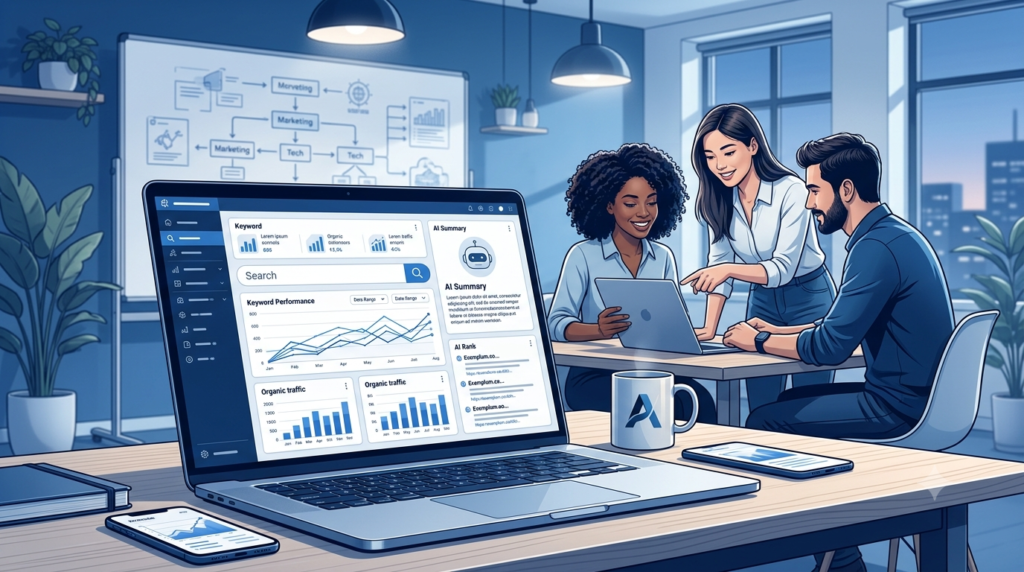
AI SEO for startups is a different job than it was two years ago. People still type queries into Google, but a growing share of them now get a written answer from an AI Overview, a chatbot, or an assistant built into their browser before they ever see a list of links. If your startup’s growth plan rests on ranking a few blog posts and waiting for clicks, that plan needs revisiting. The good news is that most of what works now is not exotic. It rewards clear writing, narrow focus and real expertise, which small teams can do well. The bad news is that the lazy shortcuts have stopped paying off. This post covers what has changed, where startups have an edge, and how to build a strategy you can run with two or three people. What actually changed in search ? For a long time, SEO was a fairly simple loop. You found a keyword, wrote a page, earned some links, and watched your position climb. Traffic followed position. That loop is weaker now because the search result page does more of the work itself. A user asking “how do I set up usage-based billing” may get a summary at the top, with a few sources cited underneath. Some of those users never click. Others click only when the summary leaves a gap, such as a comparison, a template, a tool, or an opinion from someone who has done the thing. Two consequences follow. First, informational queries with simple answers are the most exposed. If a question can be answered in three sentences, an AI system will answer it in three sentences, and your page becomes a source at best. Second, being cited or mentioned inside those answers is now a goal alongside ranking. Some people call this generative engine optimization or answer engine optimization. The label matters less than the idea: you want to be the source that AI systems pull from, and the brand that people remember afterward. None of this means traditional SEO is dead. Google still sends a great deal of traffic, and the same signals that help you rank (useful content, clean technical setup, trust) also help you get cited. What has changed is the mix of effort, and what counts as a page worth publishing. AI SEO for startups means combining traditional search fundamentals with visibility in AI-generated answers. Why startups are in a better spot than they think ? Big companies have domain authority and budgets. Startups have three things that matter more than they used to. The first is speed. You can publish a response to a product change, an industry shift, or a customer question the same week it happens. Larger companies often need weeks of approvals. The second is proximity to real customers. You talk to buyers every day. You know which objections come up, which words they use, and which problems keep them awake. That is exactly the raw material AI-generated content lacks, and it is why generic articles are becoming easy to ignore. The third is focus. A startup serves a specific group of people with a specific problem. In a world where AI systems summarize the generic middle of the internet, a narrow and credible voice stands out. The weakness is obvious too: low authority, few backlinks, a small team. So the strategy has to be selective. You can’t cover everything, so you choose where to be the best answer. A focused strategy is what makes AI SEO for startups realistic for teams with limited time and budget. Choose a narrow territory and own it. The most common startup SEO mistake is trying to rank for broad terms. “Project management software” or “email marketing” will be dominated by established players for years. Spending a year of content on those terms is a slow way to get nowhere. Instead, define a territory: a cluster of related topics where your product and your team’s experience give you a real claim to expertise. If you sell invoicing software for freelance designers, your territory is not “invoicing.” It is something like “getting paid as a freelance designer,” covering late payments, contracts, deposits, pricing projects, and handling difficult clients. Within that territory, aim for depth. Cover the subtopics thoroughly and link them together so that a reader (or a crawler) can see you have covered the subject from several angles. A tight cluster of ten strong pages usually does more than fifty scattered ones, because search systems and AI models both seem to favor sources that show consistent expertise on a subject. A simple test for any topic: could someone on your team add something to this page that a competitor couldn’t? If the answer is no, skip it or save it for later. This topic-cluster approach gives AI SEO for startups a clear direction instead of spreading effort across unrelated keywords. Write pages that answer the question and then go further. AI systems tend to pull from pages that state things plainly. That doesn’t mean writing thin content. It means putting the direct answer where it’s easy to find, then giving the reader a reason to stay. A practical structure looks like this. Open with the answer in a sentence or two. Follow with the reasoning, the exceptions, and the details. Add an example, a template, or a worked scenario. Close with what to do next. Some habits help both readers and machines: Use headings that sound like the questions people ask, so the structure is obvious. Define terms the first time you use them, in plain language. Keep paragraphs focused on one idea. Use a table when you’re comparing options across several attributes, and a numbered list when the order of steps matters. Don’t force either one onto content that reads fine as prose. Add a short FAQ only when the questions are real ones you’ve heard from customers. The second half of that structure is the important part. If your page only restates what a summary […]
Digital Marketing, Marketing

Digital Marketing: 5 Powerful Insights for Beginners

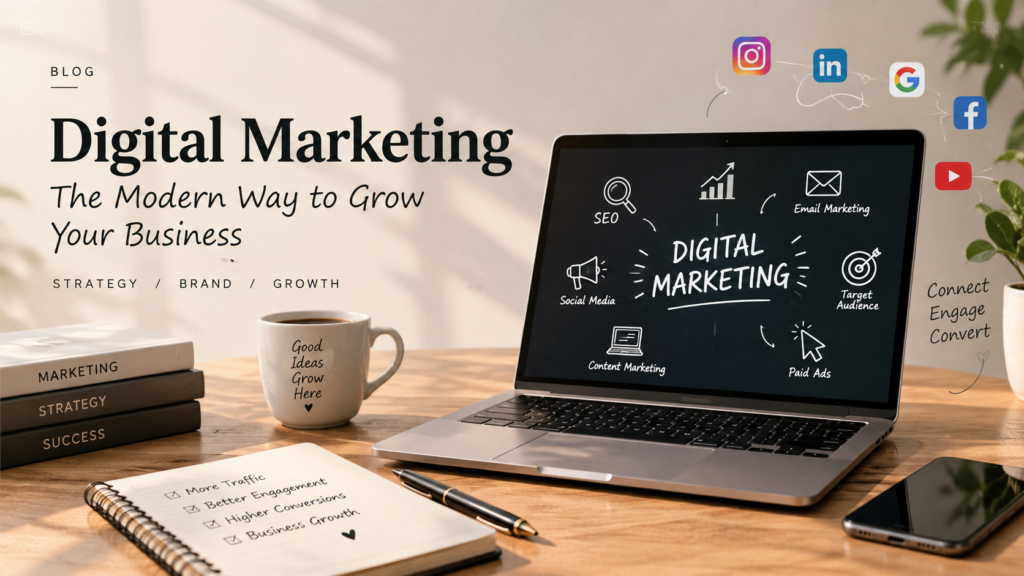
In today’s digital world, a great product or service is not enough. Digital marketing helps businesses reach the right people at the right time and in the right place. Digital marketing, from social media and search engines to email and websites, has changed the way businesses connect with customers. Digital marketing is useful whether you are a small business owner, freelancer, startup, or established company. Understanding digital marketing can help you build your brand, attract customers, and grow your business online. What Is Digital Marketing? Digital marketing is the promotion of products, services, or brands through digital channels such as search engines, social media platforms, websites, email, and online advertisements. Digital marketing differs from traditional marketing, which often relies on newspapers, television, radio, or billboards, because it lets businesses talk directly to their target audience online. Digital marketing is at work when you search for a product on Google and see an ad, follow a brand on Instagram, or get a promotional email from a company. Why Is Digital Marketing Important? Digital marketing matters because the internet is now part of everyday life. People use search engines to find information, social media to discover brands, and websites to compare products before they buy. Digital marketing helps businesses take advantage of these habits. Digital marketing’s biggest advantage is reach. With digital marketing, a small business can promote its products to people in its local area and also to customers in other cities, states, or even countries. Digital marketing is also measurable. Businesses can track website visits, social media engagement, ad clicks, leads, and conversions, so digital marketing shows marketers what is working and where to improve their strategies. Major Types of Digital Marketing Digital marketing includes several different techniques. Some of the most important ones are: 1. Search Engine Optimization (SEO) Digital marketing through SEO helps websites appear higher in search engine results. When people search for something related to your business, a well-optimized website has a better chance of being found. Digital marketing work in SEO includes keyword research, creating useful content, improving website performance, and building quality links. 2. Social Media Marketing Digital marketing on platforms such as Instagram, Facebook, LinkedIn, and YouTube gives businesses strong ways to connect with their audiences. Digital marketing on social media involves creating content, engaging with followers, building communities, and promoting products or services through organic posts and paid ads. Digital marketing on social media can also help freelancers and personal brands show their skills and attract potential clients. 3. Content Marketing Digital marketing through content focuses on creating valuable and relevant content for an audience. This can include blogs, videos, infographics, social media posts, guides, and podcasts. Digital marketing with content does not simply tell people to buy something. It offers useful information that builds trust and establishes a brand as knowledgeable in its field. 4. Email Marketing Digital marketing through email is a direct way for businesses to communicate with their customers. It can be used to share newsletters, product updates, special offers, useful content, and personalized recommendations. Digital marketing by email works best when it sends relevant content to the right audience instead of too many promotional messages. That approach helps businesses build trust, maintain customer relationships, and encourage repeat engagement. 5. Paid Advertising Digital marketing through paid advertising lets businesses reach specific audiences on platforms such as search engines and social media. Digital marketing with paid ads has one major benefit: targeting. Advertisers can often choose audiences by interests, location, demographics, or online behavior. Digital marketing campaigns can then be measured and adjusted based on the results. Benefits of Digital Marketing Digital marketing offers several benefits for businesses of different sizes. Digital marketing is cost-effective. Many digital marketing methods can be started with relatively small budgets, which makes them useful for startups and small businesses. Digital marketing offers targeted reach. Businesses can focus their marketing efforts on specific audiences instead of speaking to everyone. Digital marketing leads to better engagement. Social media and other digital platforms let businesses interact directly with customers. Digital marketing gives measurable results. Digital campaigns can be tracked with various analytics tools, so businesses can see how they are performing. Digital marketing supports brand building. Consistent online content can help a business develop recognition, credibility, and trust. Digital Marketing for Freelancers Digital marketing is not only useful for companies. Digital marketing can also be valuable for freelancers. Digital marketing lets a freelancer use a professional website, social media profiles, content, and online networking to show their skills and attract clients. A digital marketer, for example, can share case studies, marketing tips, portfolio projects, and educational content to demonstrate expertise. Digital marketing takes time to build an online presence, but consistency can create opportunities and establish a strong personal brand. The Future of Digital Marketing Digital marketing keeps evolving as technology and consumer behavior change. Artificial intelligence, automation, personalization, short-form video, and data-driven marketing are becoming increasingly important in digital marketing. Digital marketing still cannot succeed on technology alone. Businesses need to understand their audience, provide genuine value, and communicate clearly. Digital marketing in the future will likely combine technology with creativity and human connection. Conclusion Digital marketing has become an essential part of modern business. Digital marketing gives businesses and individuals powerful ways to reach audiences, build relationships, promote products, and grow their online presence. Digital marketing succeeds not by being present on every platform, but by understanding your audience, creating valuable content, choosing the right channels, and continuously learning from results. Digital marketing can give you the tools and opportunities to grow in an increasingly connected world, whether you are building a business, developing a personal brand, or starting a career as a freelancer. Digital marketing is also what we cover at digitallybypriti. Visit our About Us page to learn more about our website and mission. Want to know more about our website and mission? Visit our About Us page to learn more about digitallybypriti.

Scroll to Top